Where Does Nutmeg Come From? From Fruit on the Tree to Whole Nutmeg
You probably know nutmeg as the fragrant brown powder you sprinkle over holiday drinks or stir into rich curries. But if you took a walk through the lush canopy of the Western Ghats, you might pass right by a nutmeg tree without even noticing it.
Before it lands in your spice jar, nutmeg goes through an incredible transformation. It is actually the only tropical fruit in the world that gives us two completely different spices.
Let us look at where real nutmeg comes from, how it grows, and why buying it whole makes such a huge difference.
The Tree Itself: Myristica fragrans
Nutmeg comes from a large evergreen tree officially called Myristica fragrans. These trees love hot and humid tropical environments with rich soil that drains well. Deep inside the protected organic taluk of Joida in Karnataka, the unique climate of the Kali River basin creates the perfect environment for these trees to thrive.
A nutmeg tree does not rush. It can take up to eight years for a new sapling to yield its first harvest. Once it starts, however, it can keep producing fruit for well over 60 years.
A Hidden Treasure Inside the Fruit
If you saw a fresh nutmeg fruit hanging on a branch, you would probably mistake it for a small yellow peach.
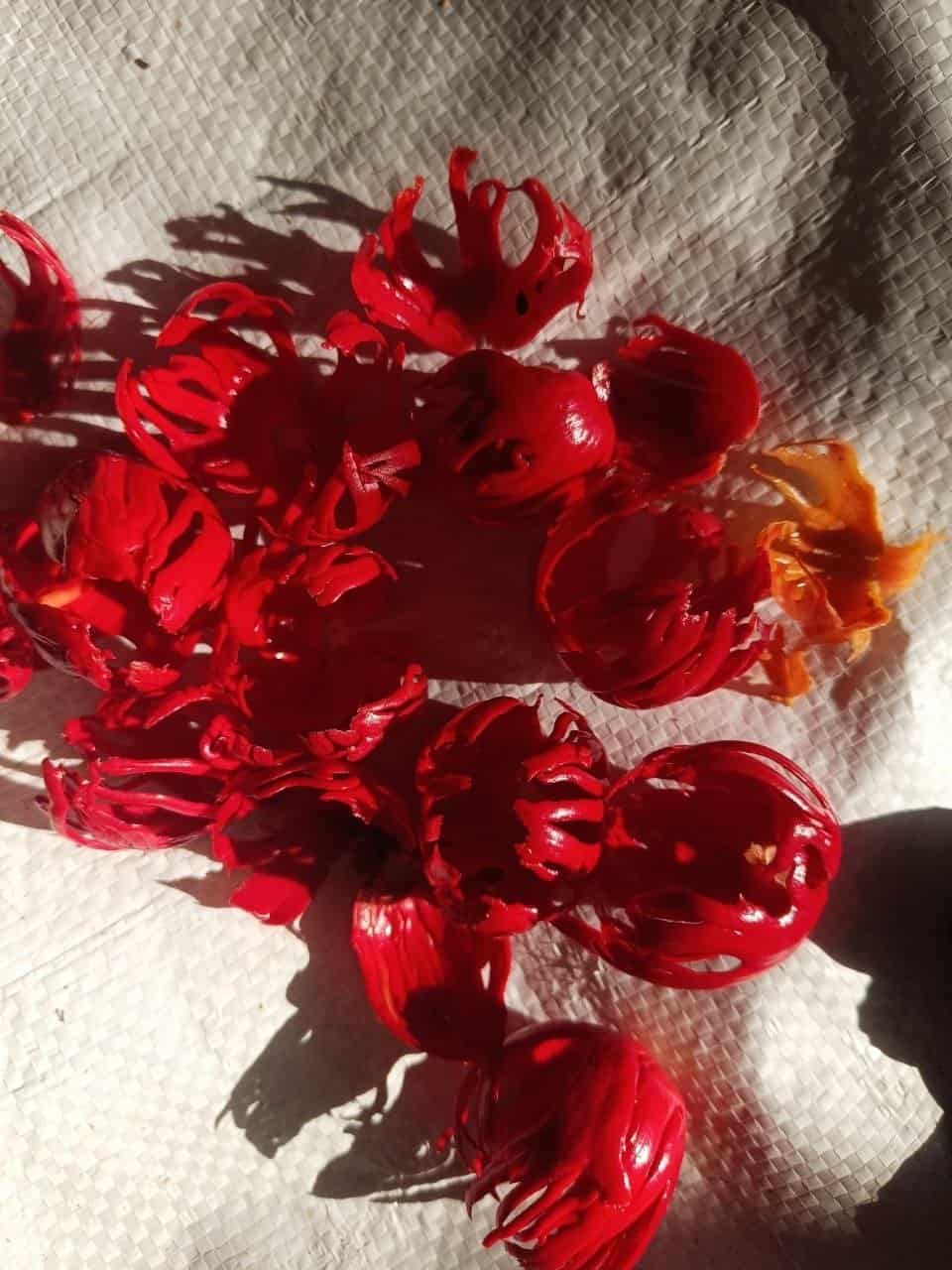
As the fruit ripens on the tree, it naturally splits open right down the middle. That split reveals the real prize inside. Looking inside the open fruit, you do not just see a nutmeg seed. You see a dark, glossy shell wrapped in a bright crimson red webbing. This vivid red lace looks almost otherworldly, and it is the source of our very first spice.
One Fruit Producing Two Spices
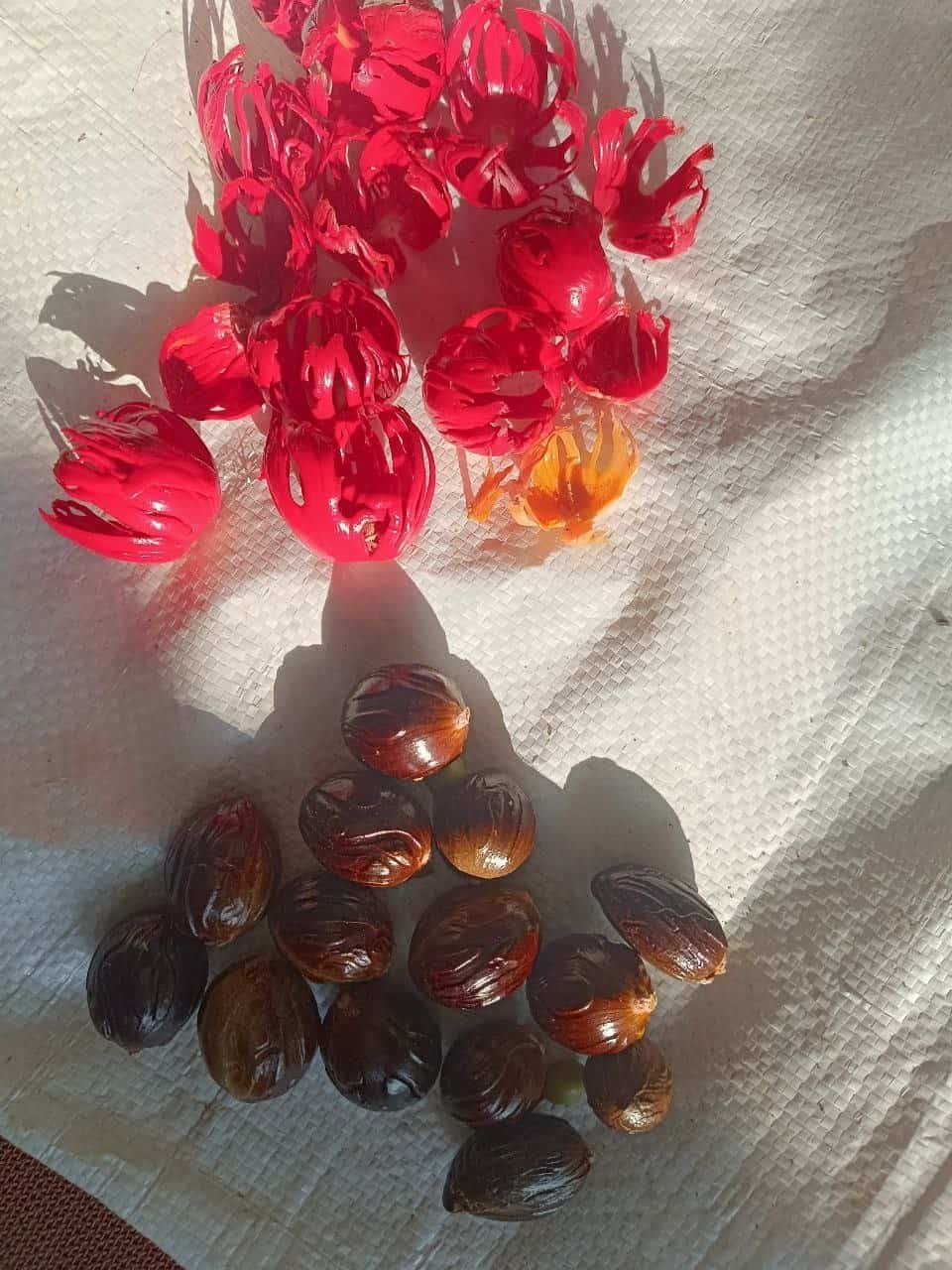
The nutmeg fruit is entirely unique in the plant kingdom because it gives farmers two very valuable spices.
- Mace: That bright red lacy webbing wrapping the shell is called mace. Farmers carefully peel this delicate layer off by hand. When it dries in the sun, it turns a yellowish orange color. Mace tastes a lot like nutmeg but is slightly sweeter and carries a tiny hint of black pepper.
- The Nutmeg Seed: After the red mace is peeled away, you are left with a hard brown shell. We carefully crack this shell open to find the actual nutmeg seed resting securely inside. This is the whole, oval shaped spice you grate into your favorite recipes.
The Joida Harvest Difference
In large commercial spice operations, nutmeg is often dried quickly using heavy industrial heating machines. Sadly, this intense heat destroys the natural essential oils that give nutmeg its strong aroma and health benefits.
At Joida Harvest, we stick to traditional methods. Once the seeds are extracted, we slowly sun dry them for weeks. This gentle process locks in the warm and woody flavor profile. Because our farm is located in a pristine organic region, our organic whole nutmeg is completely free from synthetic fertilizers or chemical washes.
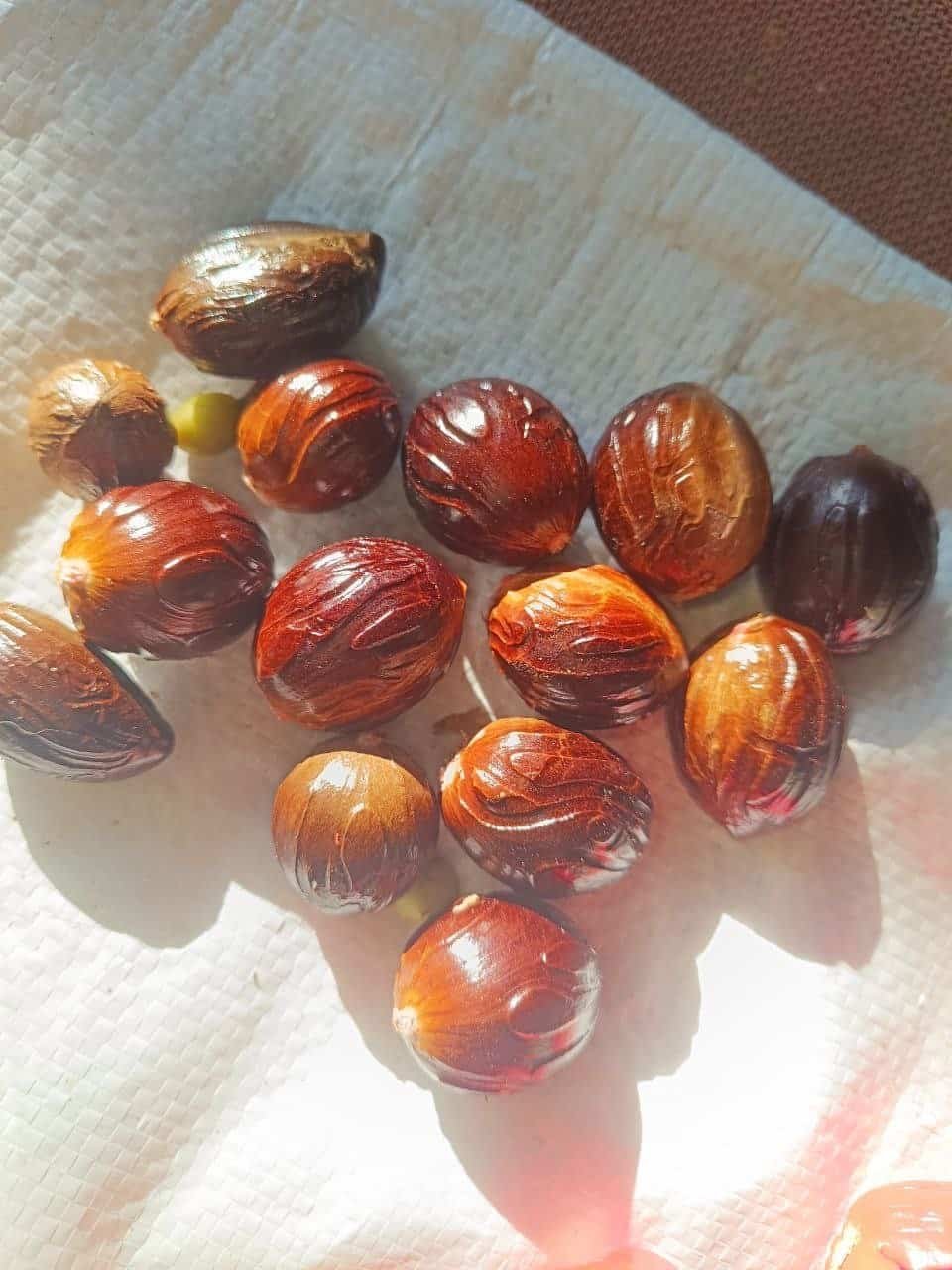
When you grate a fresh Joida nutmeg, the smell that fills your kitchen is miles apart from the stale powder found in grocery stores. The natural oils are completely intact.
If you want to taste the difference of authentic forest grown spices, you can browse our full range of farm direct goods in our complete harvest shop.
Frequently Asked Questions
Is nutmeg actually a nut?
Despite having the word nut in its name, nutmeg is not a nut at all. It is the seed of a fruit. People with tree nut allergies are usually able to eat nutmeg safely, though you should always check with your doctor if you have a severe allergy.
Why should I buy whole nutmeg instead of ground nutmeg?
The real value of nutmeg comes from its natural essential oils. The second a spice gets ground up in a factory, those oils start to evaporate. By the time a jar of pre-ground powder sits on a store shelf for six months, it has lost almost all of its flavor. Buying whole nutmeg and grating it fresh guarantees you get maximum flavor every single time.
How long does whole nutmeg last?
Because the hard outer surface protects the oils inside, whole nutmeg has a very long shelf life. If you keep it in an airtight container in a dark cabinet, whole nutmeg can easily last for three to four years without losing its strength.
What is the best way to grate whole nutmeg?
You do not need any special equipment. A standard microplane or the smallest holes on a regular cheese grater work perfectly. Just grate whatever you need for your dish and put the rest of the seed back in your jar.
Bring the True Aroma of the Forest to Your Kitchen
You now know the journey nutmeg takes from the untouched canopy of the Western Ghats straight to your hands. It is time to experience the difference for yourself. Do not settle for dull and factory ground powders that have been sitting around for months. Grating a fresh and sun dried seed completely transforms your baking, curries, and warm drinks.
Ready to upgrade your spice rack? Order our Organic Whole Nutmeg directly from the farm today and taste the pure flavor of nature.